
Paris Township Previous Resident Eras
Previous residents leave different kinds of records in different periods. The modern deed chain starts from a current parcel, while older household evidence may be found only in a physical directory, census microfilm, historical tax material, cemetery reading, probate file, or map. These sources do not have equal coverage or prove the same thing. The era table keeps the Portage County cutoffs visible before a name is attached to a Paris Township address.
| Source | Years it covers | Where held | What it can show |
|---|---|---|---|
| Recorder online index | 1979 to present | Portage Recorder eSearch | Indexed recorded instruments; images from 2001 forward |
| Recorder book and page bridge | 1979 to 2000 | Recorder index and counter | Indexed name path leading to office retrieval |
| Earlier deeds and indexes | Before 1979 | Recorder counter, books, archives | Prior land transfers when no published web coverage exists |
| Portage telephone and directory collection | 1918 to 2020 | Kent State Special Collections | Subscriber and directory evidence for selected editions |
| Federal census | 1820 to 1950 public | NARA and official census access | Dated household snapshot, not annual residence |
| PCCOGS census microfilm | 1820 to 1880; 1900 to 1930 | PCCOGS and PCHS collection | Local access to selected historical census years |
| Probate and cemetery material | Probate from 1817; Paris and Charlestown readings 1819 to 1993 | Probate, PCHS, and PCCOGS | Heir, death, burial, and family-connection clues |
For a recent transfer, begin with the parcel and Recorder. For a period before the online deed index, move to the Recorder counter before drawing a conclusion. For a household question, select an exact directory or census year, then test the name against the property's legal description and recorded transfer sequence.
Paris Township Previous Resident Cutoffs
The Portage County Recorder's online index begins in 1979. Printable images begin in 2001, and entries from 1979 through 2000 can lead to a book-and-page reference. That split matters when a search for past residents reaches an older owner. A missing image in the web system does not establish a missing deed. It signals a different access channel: the Recorder counter, historical books or indexes, tax maps and plats, County Archives/Microfilm, and the local research repositories.
Use the address only to find the current parcel. From there, retain the legal description, parcel number, recording date, instrument number, and book or page when supplied. A public office can provide existing records, but it does not have to assemble a full chain of title or decide that two historical names represent the same person. The exact property description is the safeguard.
Paris Township trustee meeting records are a separate local public-record route for current public actions and minutes.
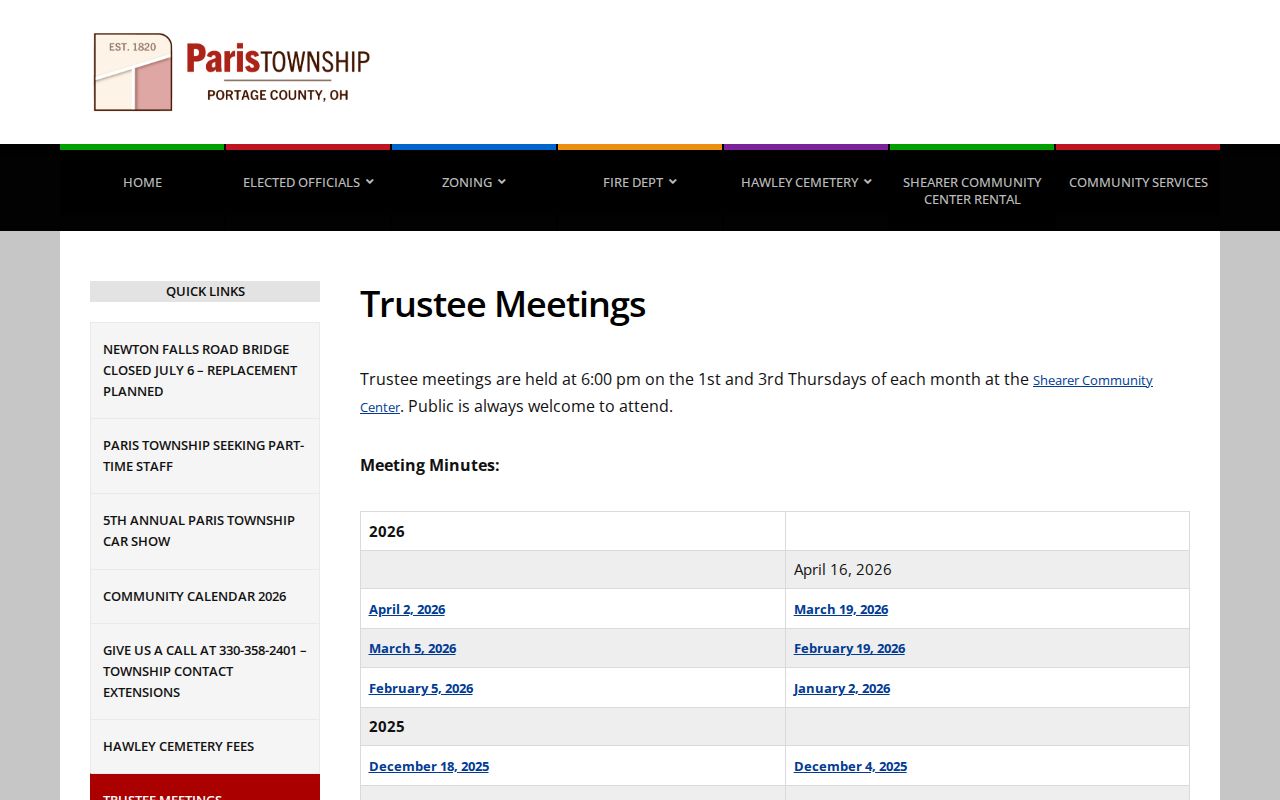
Minutes can date a public township matter tied to an address or name when one appears in the record. They are not a substitute for a deed chain or a household record.
Follow Paris Township Deed Chains
Recorded deeds trace land interests, not a complete list of people at an address. Still, they are the strongest backward framework for past residents because each instrument can connect a party name to the same legal description. Start with the Auditor's current parcel card, then use the Recorder's grantor and grantee index to identify the acquisition. At each step, compare the lot, block, subdivision, metes-and-bounds language, or parcel history before treating the prior instrument as the same Paris Township property.
- Find the current parcel through the Portage County Auditor's property search and copy the situs address, parcel number, current title holder, and legal description.
- Search the current title holder as a grantee in Recorder eSearch to identify the acquisition instrument and its seller.
- Search that seller as a grantee to locate the seller's earlier acquisition. Compare the legal description before adding another link to the chain.
- Repeat only while the parcel description or reliable parcel history continues to match. Record the date and source of every transfer.
- When the path reaches pre-1979 records, take the legal description and available book or page to the Recorder counter or archival route instead of guessing from a street number.
- Grantor
- The party transferring an interest in a recorded instrument.
- Grantee
- The party receiving an interest in that instrument. Searching a person as a grantee can reveal an earlier purchase.
- Chain of title
- A sequence of recorded land transfers for the same property, checked by legal description rather than name alone.
- Legal description
- The deed's formal parcel description. It can bridge rural roads, postal labels, and changes in address presentation.
Paris Township Previous Resident Directories
Paris Township did not produce one continuous city-directory series of its own. The verified historical shelf is the Portage County, Kent, and Ravenna telephone and directory collection at Kent State University Special Collections and Archives. Its finding aid covers 1918 through 2020 and includes named Portage County, Kent, Ravenna, Mantua, ConSurvey, and telephone-directory sequences. The collection can supply a dated subscriber or directory clue when an edition covers the relevant service area, but it cannot prove that every Paris Township household appears in every volume.
Use the specific title and year, not a general label. The 1959 Robinson's Portage County directory, selected Kent-Ravenna issues, and later Portage County telephone directories may be relevant depending on the period. Reed Memorial Library's local-history room and the Portage County Historical Society or PCCOGS supply additional directory, yearbook, obituary, map, and family-history access. The collections themselves, shelves, and verified runs are detailed on the Paris Township directory book page.
PCCOGS resources are the captured source for the local genealogy and historical-collections route.

PCCOGS describes obituary, cemetery, probate, poll-book, newspaper, census, and township-history material that can test a dated directory clue against other Portage County evidence.
Pair Paris Township Past Census
Directory and census evidence work best as a dated sequence. Federal census schedules from 1820 through 1950 are public under the federal release rule, while PCCOGS reports local microfilm for 1820 to 1880 and 1900 to 1930. Match a selected directory year to the nearest available census year, then test the name and place against the deed chain, historical tax material, cemetery clues, and the appropriate probate or marriage record. An absent telephone listing is not proof that a household was absent.
- Select the deed date or historical period connected to the Paris Township parcel.
- Check a directory edition that actually covers the nearby postal or service area, recording the exact title and year.
- Compare the name with the nearest public census schedule or PCCOGS microfilm period.
- Use the legal description, map, tax list, probate item, or obituary date to test whether the geographic and time sequence holds.
Newspapers can add a date, spelling, or community context, but PCCOGS's documented newspaper runs must be read from the original notice or microfilm before a name is repeated as fact.
Paris Township Previous Resident Endpoints
Hawley Cemetery is a township-run historical endpoint, not an address directory. The burial portal begins with a surname initial and can lead to a detail entry with available age, sex, death information, late residence, veteran notation, remarks, section, lot, and grave. Record the transcription and cemetery placement exactly, then compare it with an obituary, death-record route, probate estate, or a historical-society cemetery volume. The site cautions that spelling and completeness are not assured.
The Hawley Cemetery records hub is the captured source for the township's burial, lot-owner, map, fee, and regulation links.
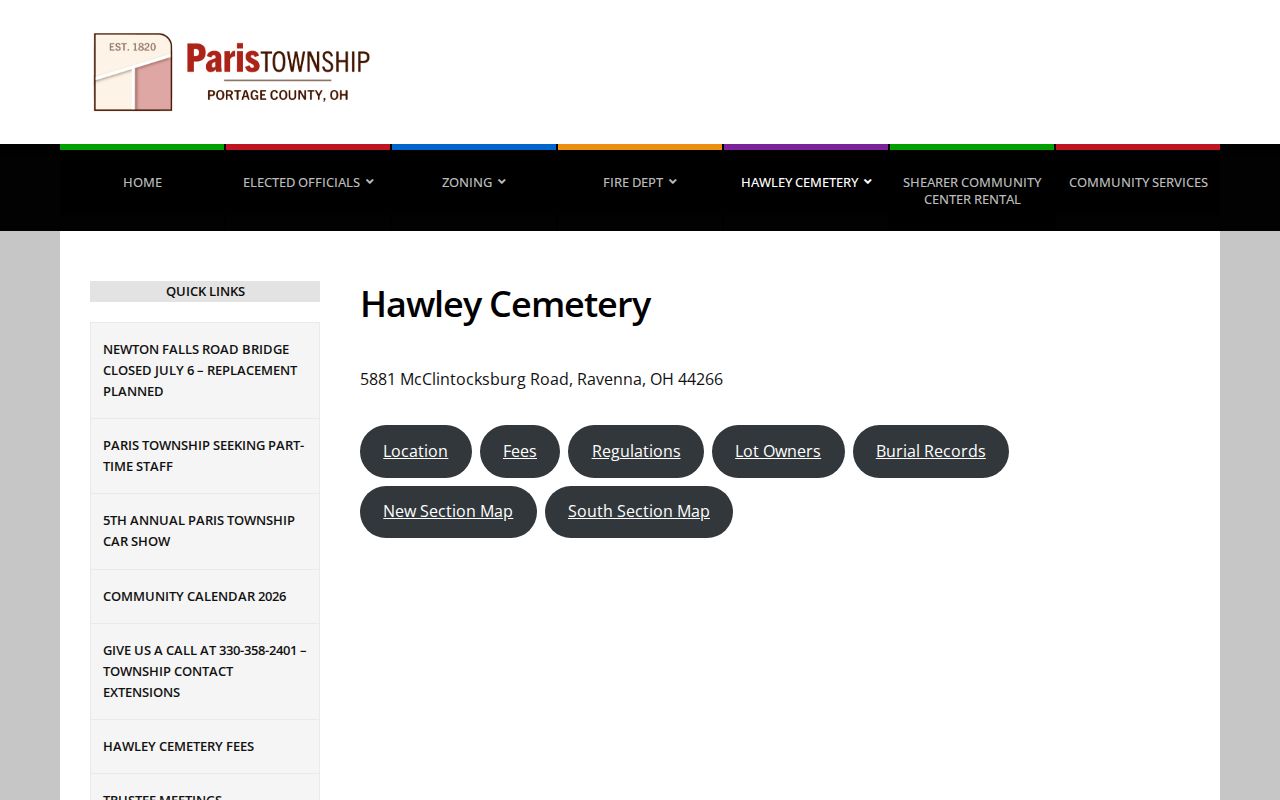
A burial clue can help close a family-history trail, but it does not independently establish who lived at a specific Paris Township address.
Hawley's lot-owner search is the captured source for the New and South section search fields.
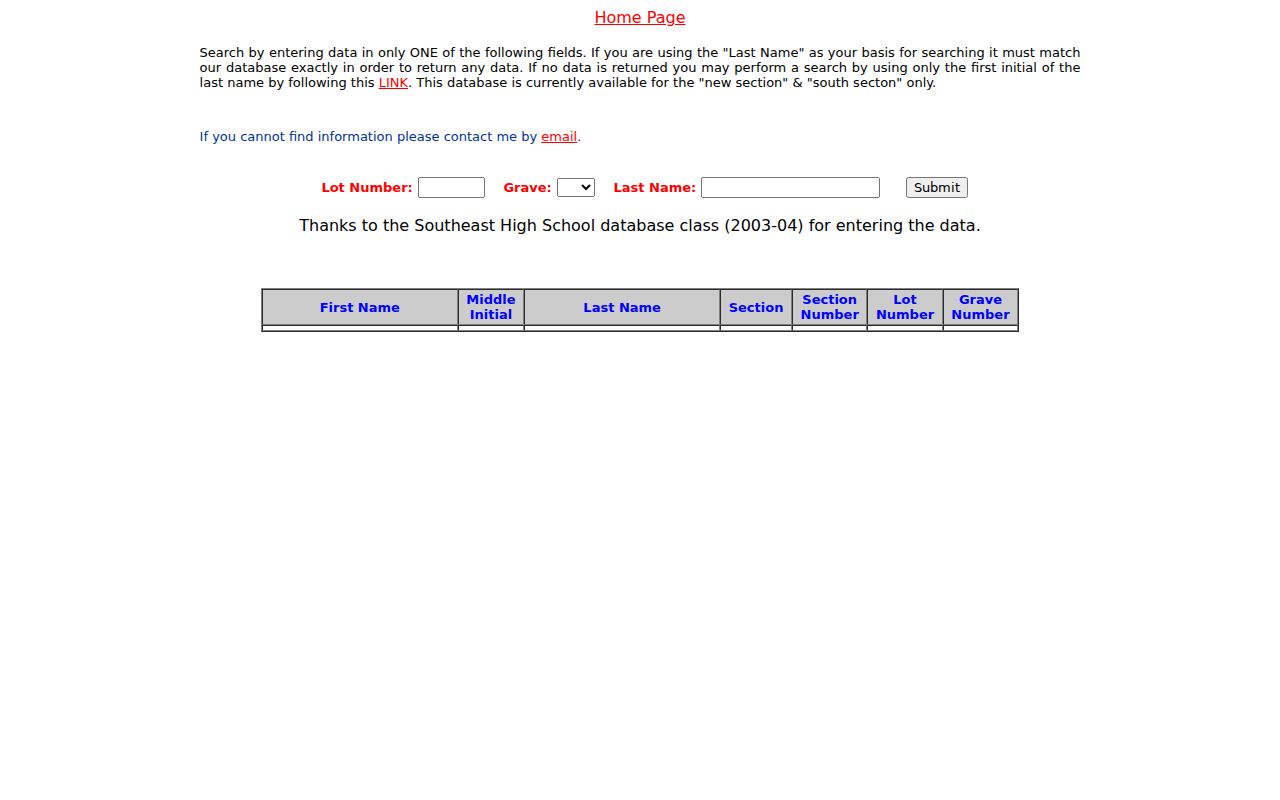
Its exact-name, lot-number, and grave routes can identify a family or estate connection. They do not establish a complete address history.
Hawley Cemetery's fees and services page documents cemetery operations and distinguishes those charges from any research-copy question.
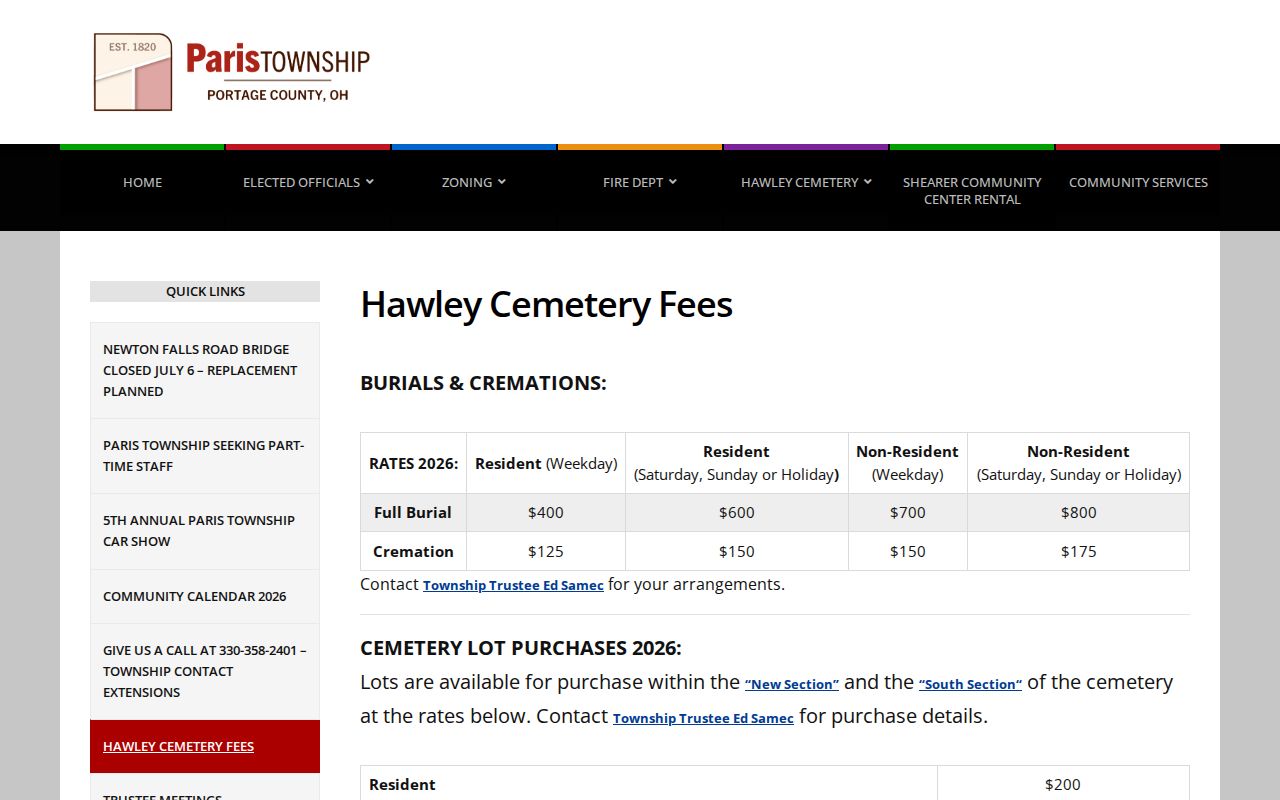
For a particular cemetery record, use the portal clue first, then call the cemetery contact or request the relevant lot or deed record if it is maintained.
Paris Township Previous Resident Probate
When an owner dies, the next transfer can be explained by an estate, trust, fiduciary, or heir rather than a direct sale. Portage County Probate Court holds estate and guardianship records beginning in 1817, and the County Records Search page identifies separate historical index paths. Probate material can support a family-history or heir trail when the case role, relationship evidence, property description, and public copy are checked together. It should not be used to assume that a surname match alone identifies a family member.
The access sequence is practical: call or visit Probate with the name and approximate date, use the court's counter or index books, request an available copy through the Court's form or mail route, then supplement older material through PCHS, PCCOGS, or County Archives/Microfilm. Some probate categories are restricted, and a copy request may have a fee. The earlier estate index is a lead to the actual file, not the final answer.
Note: Marriage records begin about 1808, while estate and guardianship records begin in 1817, so the custodial start date is not proof of an online result.
Paris Township Arsenal Address Break
PCCOGS's 2026 Homes, Farms, and Families Displaced by the Ravenna Arsenal project explicitly includes Paris Township properties affected in 1940 through 1943. That history is a reason to test continuity, not to assume it. An affected property may have been moved, sold, or described under an earlier road or community name. Compare historic maps, recorded deeds, tax records, photos, newspapers, and the Historical Society township drawer before connecting an earlier address to a modern parcel.
The longer record context also includes an 1874 Portage County atlas, with Paris Township and Storrsborough history, and local maps reaching at least to 1857 in PCHS material. No authoritative Paris Township street-renumbering history, historical Sanborn run, or courthouse-loss story was found. Treat those gaps as a prompt for counter and archive research, never as permission to invent missing coverage.
Map Paris Township Previous Residents
Historical maps place the old record trail in physical context, but they do not create a modern address match. The 1874 atlas can show an earlier land, road, and community setting. Plats and surveys from the Recorder and GIS route can connect lot or subdivision language to a modern parcel. Start with the Auditor's parcel number and legal description, then compare only records that describe the same land interest. A Ravenna postal label can also belong to a Paris Township physical address, so postal city and government boundary should be kept separate.
For a current named-street sequence or present parcel details, use the Paris Township street directory route. The backward trail remains stronger when it avoids turning a map line or a postal label into a claim about continuous residence.
Paris Township Previous Resident Limits
Past residents research is a house-history and family-history process built from dated public sources. A recorded owner, directory subscriber, voter, cemetery record, probate party, and census household are different roles. No one source is a complete history of everyone connected with an address. Save the exact title, page or document reference, date, and custodian for each clue, and allow unanswered gaps to remain unanswered when the record trail stops.
Lawful use. Use Paris Township previous-resident records for lawful personal, family-history, heir, or house-history research only. Ohio's menacing-by-stalking law, R.C. 2903.211 prohibits a pattern of conduct that knowingly causes fear or mental distress, so never use a historical record to track, harass, or harm a living person.